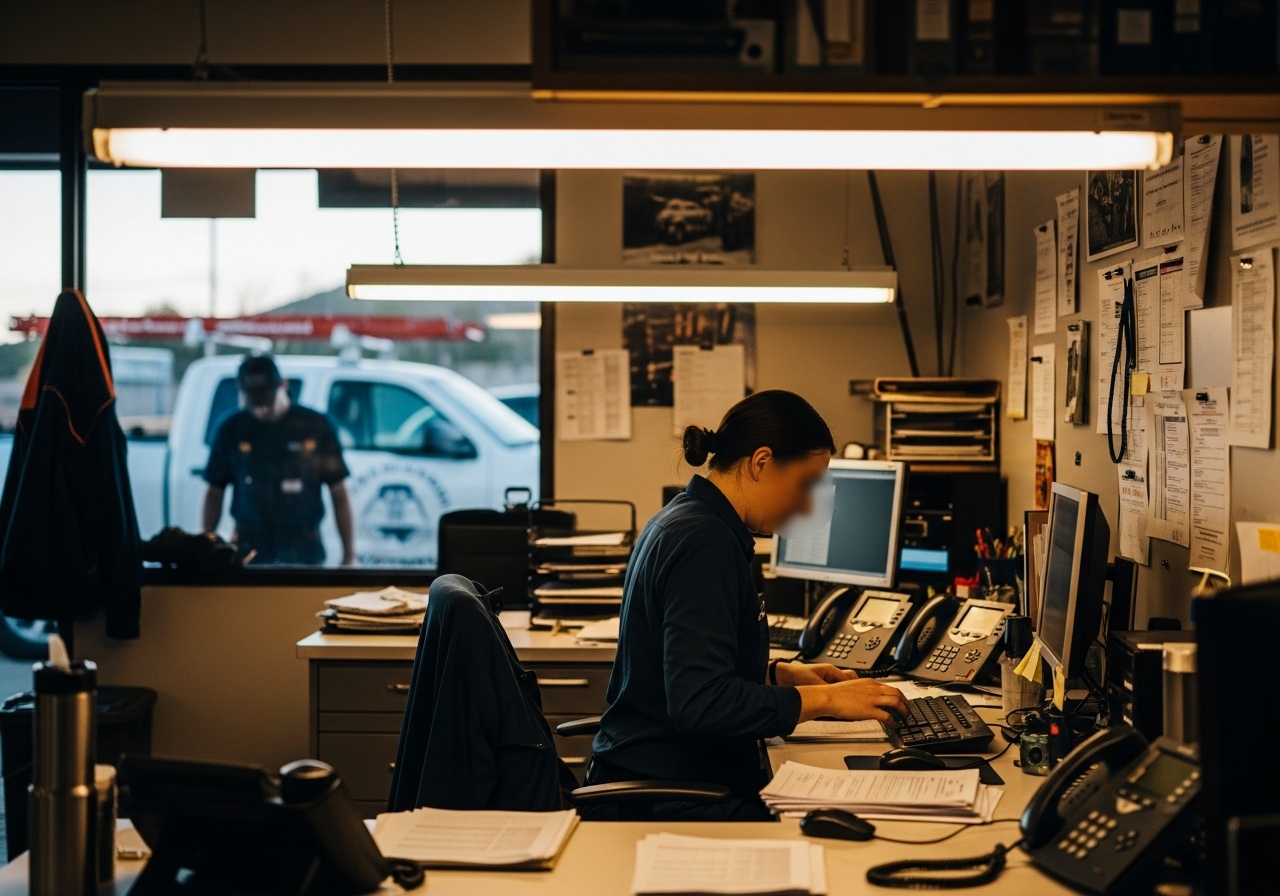
When a customer calls your shop, the clock starts ticking. Studies show that the first 30 to 60 seconds of a call are critical for engagement. If the caller hears a ring, then silence or voicemail, they’re likely to hang up and call a competitor instead. This is the intake bottleneck—a choke point where leads are lost before your team even has a chance to respond.
One common cause is limited staffing. In many 3-to-15-person shops, the dispatcher doubles as the scheduler, customer service rep, and sometimes even parts coordinator. Multitasking under pressure leads to dropped calls or rushed conversations that miss key details.
Another factor is after-hours coverage. Calls received outside normal business hours often go unanswered or get routed to voicemail, frustrating customers who need urgent service. Without a reliable system to catch these calls and triage emergencies, you leave money on the table and risk damaging your reputation.
Identifying the intake bottleneck starts with tracking call metrics: how many calls ring unanswered, average wait times, and after-hours call volume. From there, you can explore solutions like call forwarding, dedicated intake lines, or AI-assisted answering to ensure every call is captured and handled promptly.